
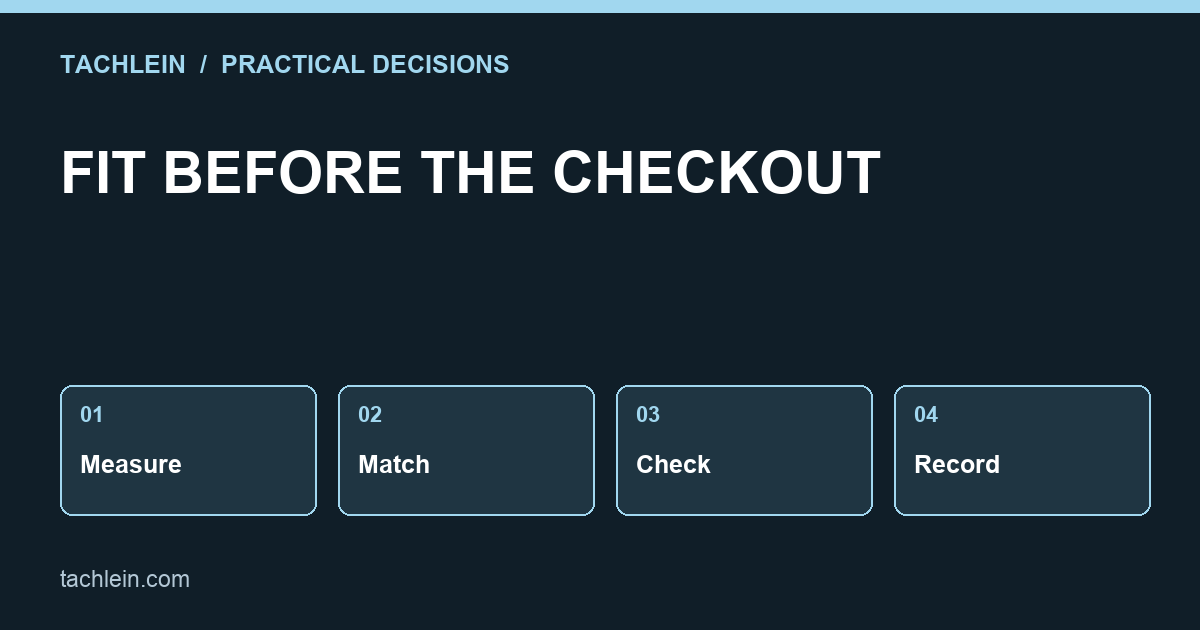
A familiar size letter is a useful starting point, not a reliable measurement. Two garments labelled medium can fit differently because their cuts, fabrics and measurement methods differ. A comparison works best when both sides describe the same thing.
This guide from Techlein shows how to make a simple fit record using a garment you already like. It does not promise that measurements eliminate every return. It helps identify avoidable mismatches before ordering.
Find out what the chart measures
A body-size chart describes the person the garment is intended to fit. A product chart describes the garment itself. Finished garments may include extra room for movement or a deliberately loose fit. Comparing a body’s chest circumference directly with a flat garment width produces a misleading result.
UNIQLO’s sizing explanation distinguishes body and product measurements and recommends comparing a suitable existing garment with finished-product measurements. That is an example of one retailer’s method, not a universal rule for every shop. Read the diagram attached to the exact item you are considering.
Make a reference garment record
- Choose a clean garment that fits the way you want the new one to fit.
- Place it flat without stretching it.
- Follow the seller’s measurement diagram, including the starting and ending points.
- Use one unit throughout the comparison.
- Note the fabric, stretch and whether the garment has already been washed.
For a shirt, relevant measurements may include chest width, shoulder width, sleeve length and body length. For trousers, the chart may use waist, hip, rise and inseam. Do not substitute one measurement for another. An outside-leg measurement is not the same as an inseam.
Use a comparison table
| Field | Your reference | New item |
|---|---|---|
| Measurement type | Flat garment or body | Confirm the chart uses the same type |
| Key dimensions | Record two or three that determine comfort | Compare the actual values, not the size letter |
| Fit and fabric | Loose, fitted, stretchy or structured | Read the product description and composition |
| Uncertainty | What feels tight or loose already? | What has the seller not measured? |
Illustrative example: your favourite shirt measures 52 cm across the chest when laid flat using the same method as a product chart. The chart lists 50 cm for one size and 54 cm for the next. Those are differences of 2 cm in flat width; they are not automatically equivalent to differences of 2 cm in body circumference. Consider the intended fit and fabric before selecting either.
Treat fabric and cut as part of sizing
A stretchy knit and a structured woven garment can feel different even when their flat measurements match. Sleeve shape, lining, rise and seam placement can also affect movement. Read the composition and care label, and look for photographs showing the garment’s construction rather than relying only on a posed model image.
Do not assume that a garment will shrink by a particular amount or stretch enough to correct a known mismatch. If the fit depends on an undocumented change after washing, it is an uncertain purchase. Ask the seller for the missing dimension or choose an option with clearer information.
Read the return conditions before checkout
Check the exact item’s eligibility, the return window, tag and packaging requirements, collection method and any charges. Marketplace rules may differ by seller or item. A broad banner about easy returns does not answer every product-specific condition.
Save the product page, selected size and chart for your own reference. These help you compare what arrived with what you ordered. They do not replace the seller’s process or establish a legal entitlement by themselves.
Try the item without losing your options
On arrival, check the label and inspect the garment before removing tags or washing it. If allowed by the seller’s policy, try ordinary movements such as sitting, reaching and walking. Consider the shoes or layers you expect to wear with it. A garment that looks correct while standing still may not suit its intended use.
Record what worked: the useful measurements, fabric and cut. Over time, this becomes a personal fit reference instead of a collection of inconsistent size labels. Keep it private and practical; photographs and personal measurements do not need to be posted publicly to make the system useful.
Continue with the right Tachlein guide
- checking fabric quality online
- evaluating clothing sellers and returns
- Techlein Decision Toolkit: Compare Before You Buy
- Tech Lein Streaming Checklist: Picture, Captions and Data
Editorial note: Prepared with AI assistance and checked against the primary sources linked in this guide on 27 October 2026. Examples and worksheets are illustrative; they are not claims of hands-on product testing. Features and terms can change. Use the linked provider guidance for current details.